Almost everything I know about building websites, I learned on client projects. But one part cannot be learned there: the part that requires failing thoroughly, throwing away a decision halfway through, or testing an idea you cannot yet justify in a meeting.
That is why I built Logic2B: a public lab where every theme is a complete project, browsable and deployed live.
It is not a catalogue of pretty templates or a showcase of isolated pieces. It is the way I have found to keep my judgement sharp without using real client projects as a testing ground.
What Logic2B actually is
Each Logic2B theme is a finished website for a specific sector: banking, neurotechnology, electric mobility, independent eyewear, technical outdoor gear, creative communities. Each has its own art direction, content architecture, components and code.
And — this is the part that matters — all of them are published and can be explored. No flattering screenshots, no mockups tilted in perspective. If something breaks on a real phone or takes too long to load, you will see it.
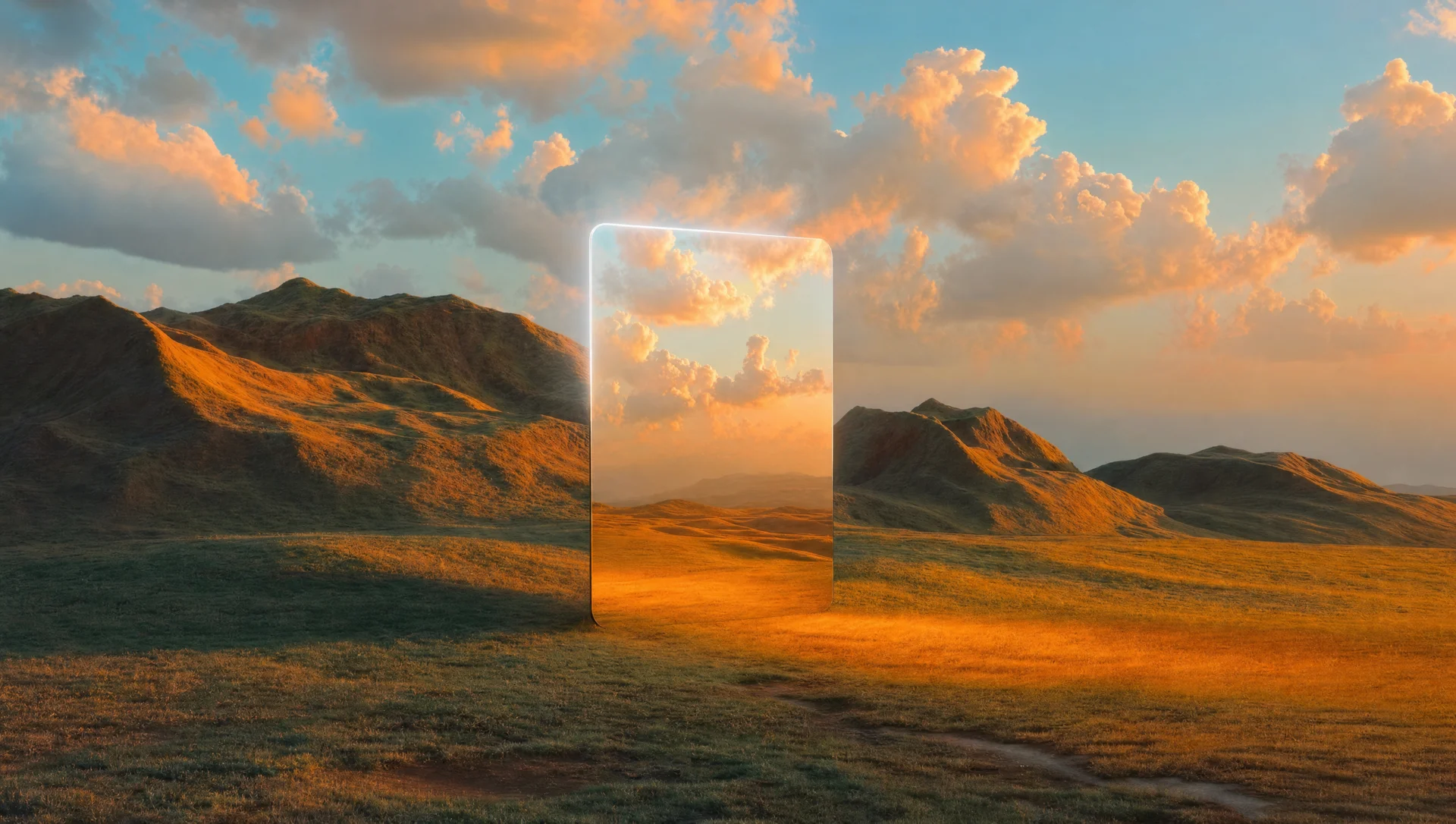 Infinite / PortaleFintech and digital banking
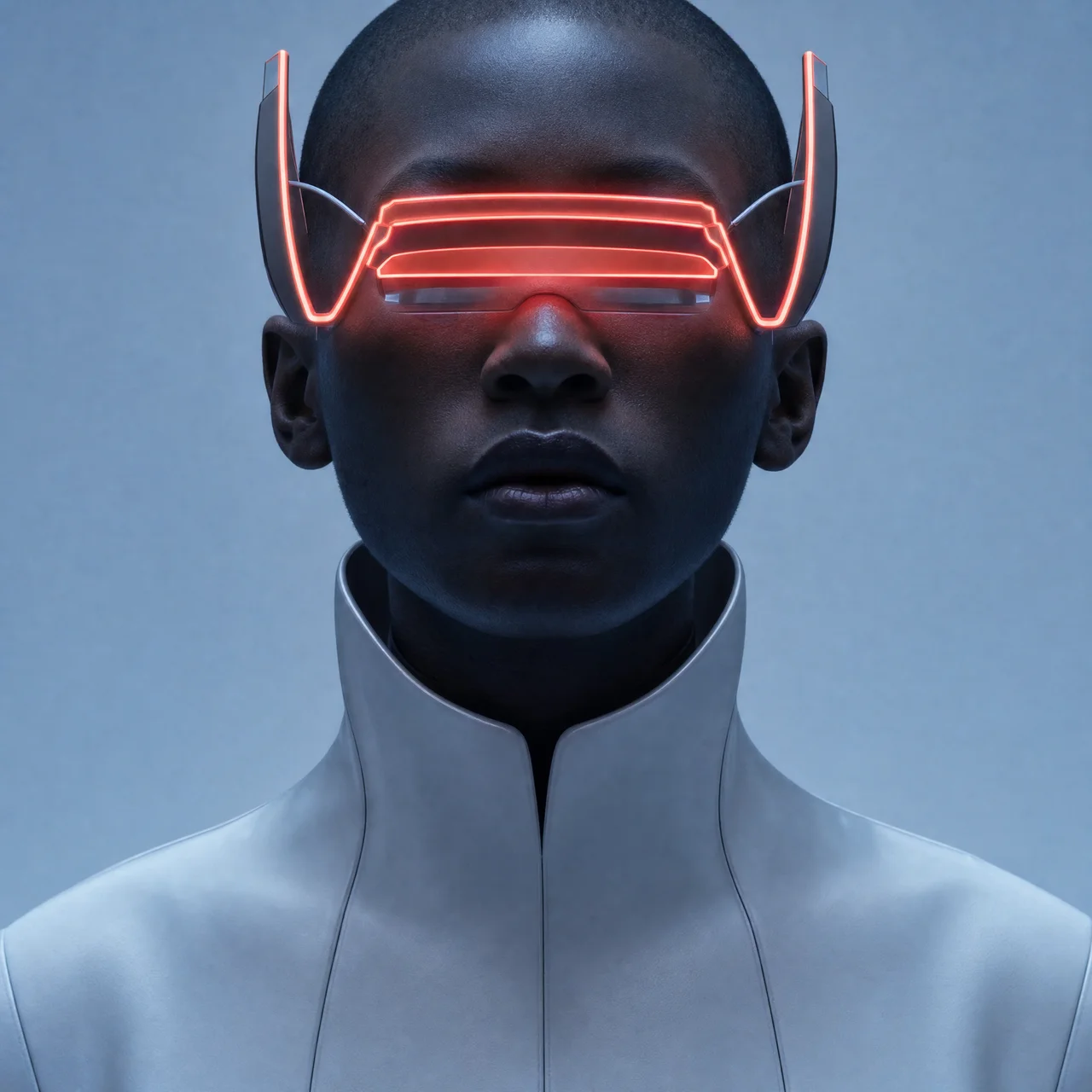 Ion 7 OpticsNeurotech and wearables
Nexus / CircleCreative communities
Ion 7 OpticsNeurotech and wearables
Nexus / CircleCreative communities
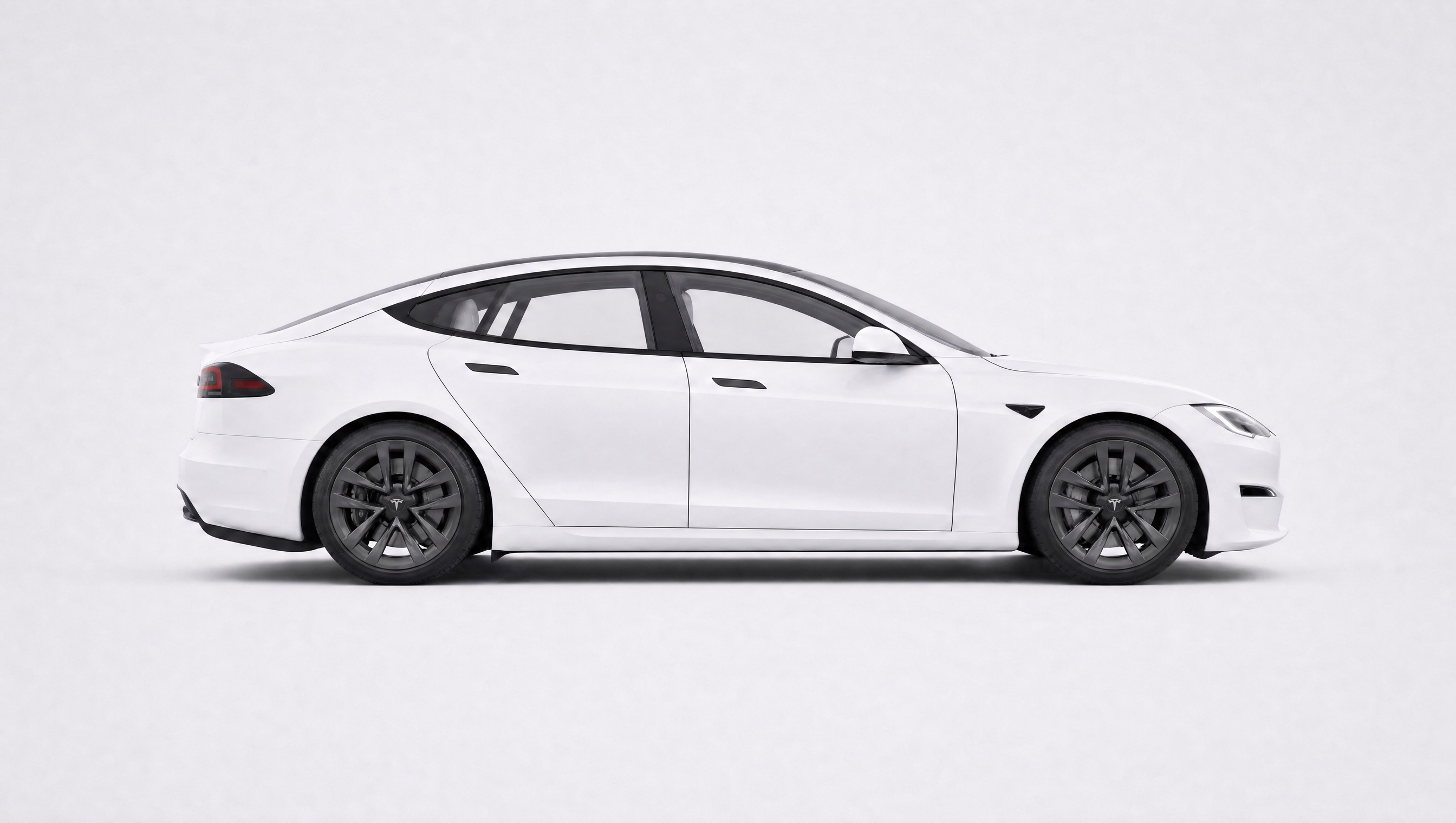 Tesla Model ThreeElectric mobility
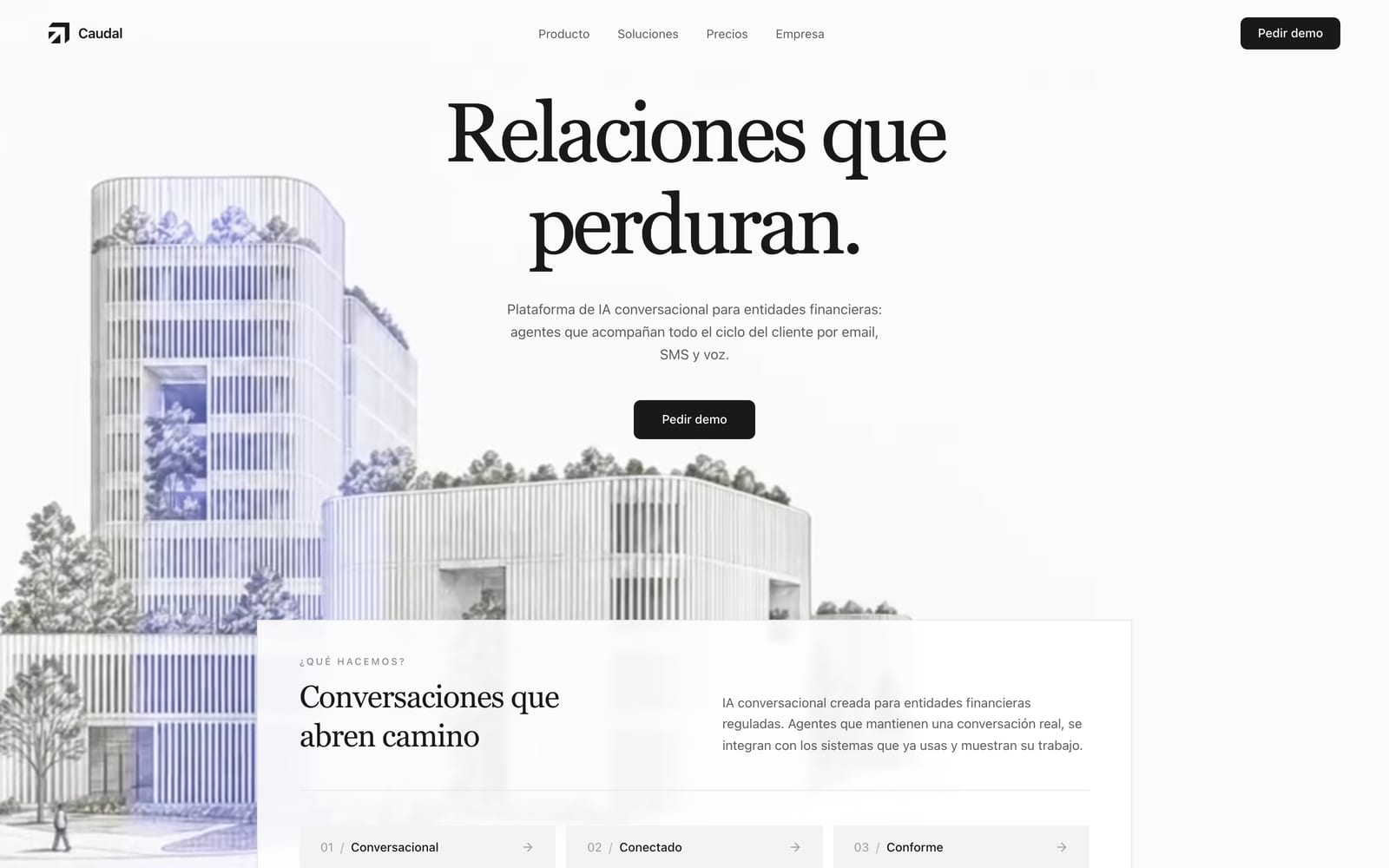 CaudalBanking and financial services
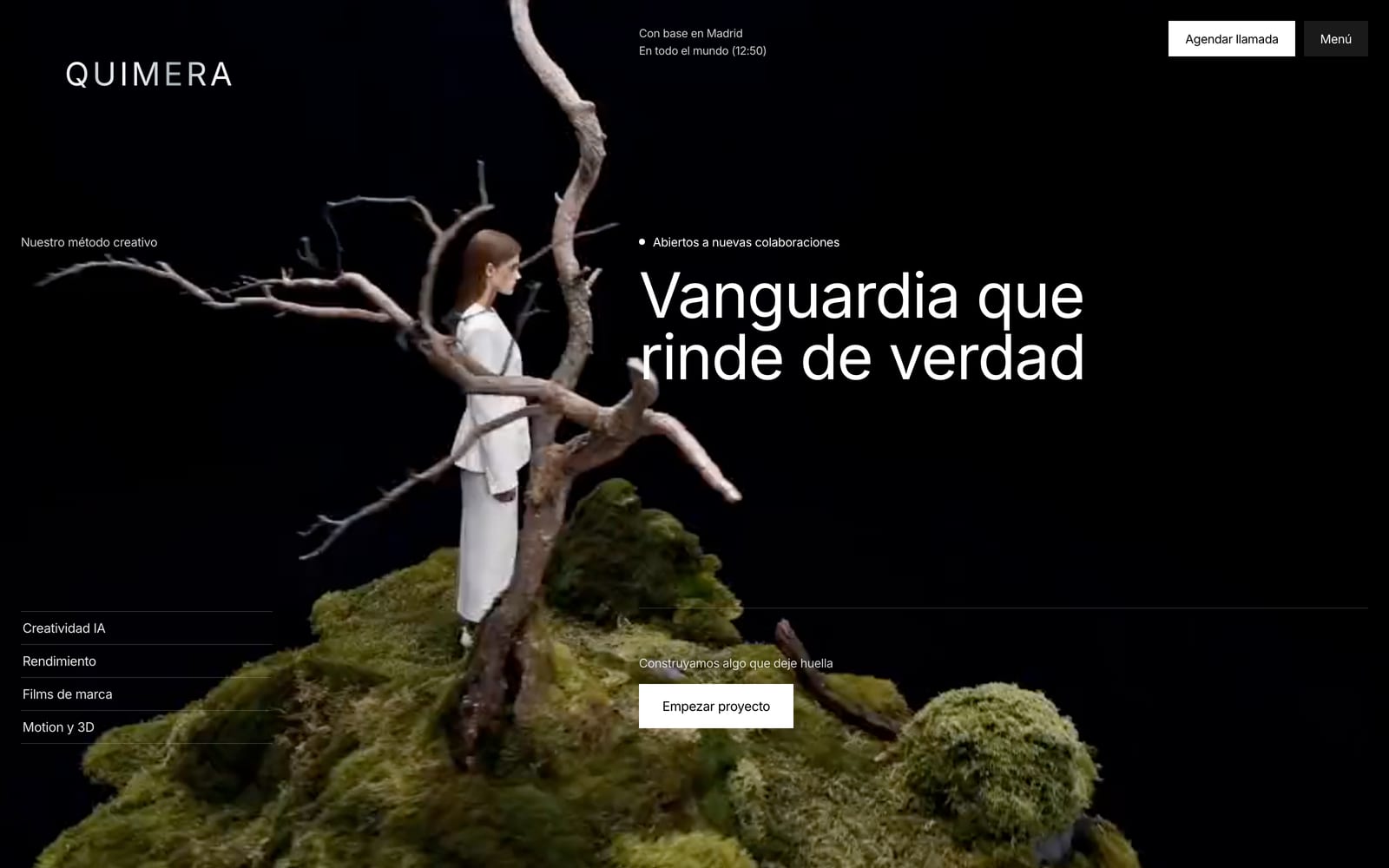 QuimeraCreative studios and production
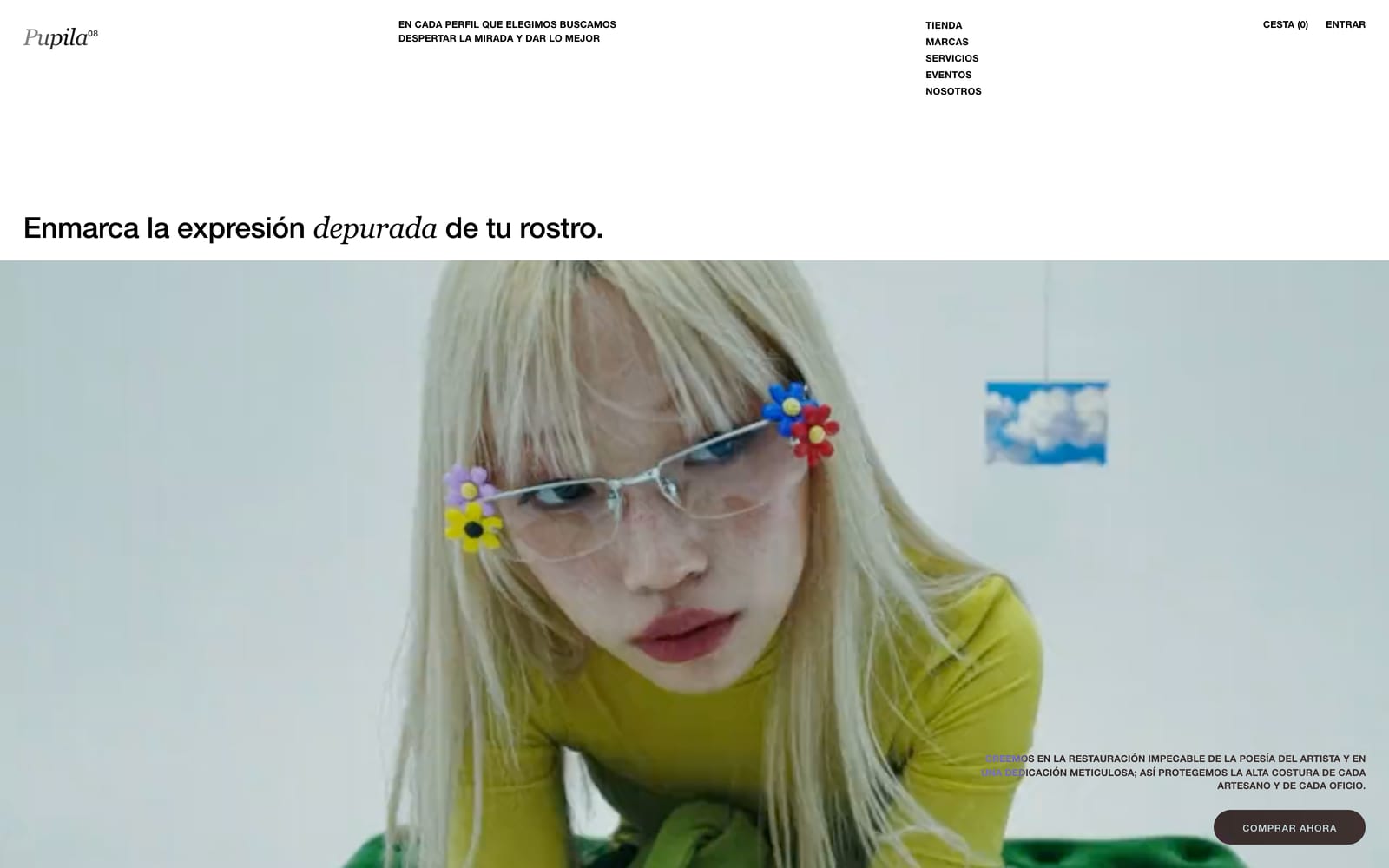 PupilaIndependent eyewear
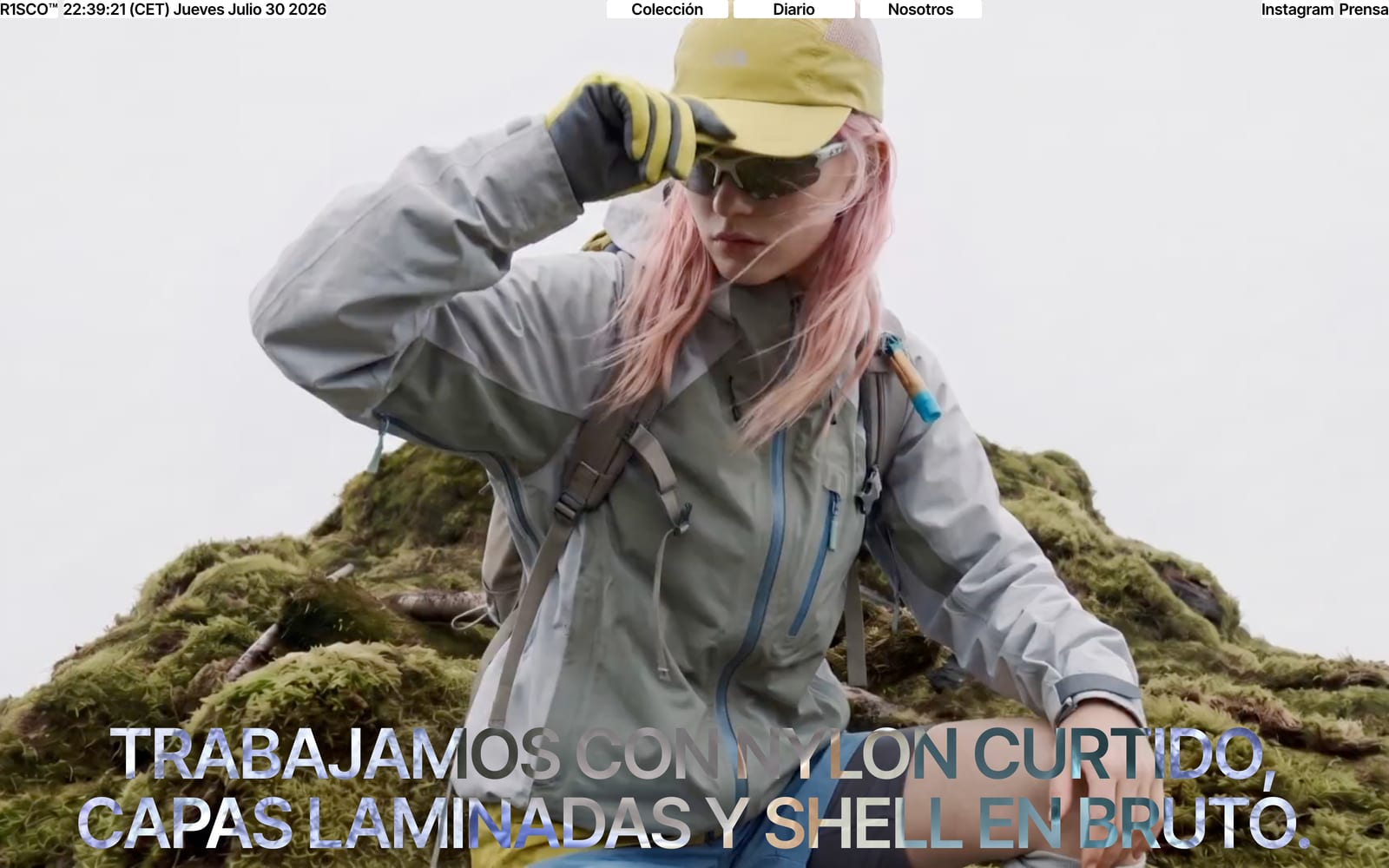 RiscoTechnical outdoor and mountain
Why a complete theme instead of an isolated piece
I could do what nearly everyone does: publish visual explorations, standalone sections, a striking hero every week. It is faster and it performs better on social media.
The problem is that an isolated piece forces you to solve nothing. A beautiful hero never has to coexist with a pricing table, a long form, a listing with fifteen items and a dull legal page. The moment it does, half of those aesthetic decisions collapse on their own.
A complete theme forces uncomfortable questions:
- What happens when this headline is three times longer?
- How does this component behave with no image?
- What is on screen while it loads?
- Is it still readable at real contrast, on a phone, outdoors?
- Can someone who did not design it edit it?
That is exactly the difference between designing screens and designing systems. Logic2B exists to force me into the second option every time.
The rules of the lab
For an experiment to teach anything, it needs constraints. These are mine:
1. One theme, one hypothesis. Each is built to test something specific: dense navigation, a highly technical product narrative, typography as structural element, a serious use of colour in a conservative sector. Without a hypothesis, it is just decoration.
2. Plausible content, never filler. No lorem ipsum. I write credible copy for the sector, at the length it would realistically have. That is what reveals whether a structure holds up or is merely photogenic.
3. Everything has to ship. If it cannot be deployed and browsed, it does not count. The gap between “it looks good in the design file” and “it works in production” is where the real work lives.
4. A performance budget. Every theme has a limit on weight and JavaScript. When a visual idea does not fit inside it, the design adapts — not the limit.
5. It can be scrapped entirely. Some themes have never been published. That freedom is precisely what you do not have on billable work, and it is why the lab earns its place.
How it is built
All themes share a common technical foundation: Astro to generate static HTML and ship zero JavaScript by default, with Svelte islands only where an interaction genuinely justifies one.
On top of that, each theme defines its own layer of decisions: colour and typography tokens, spacing scale, components and responsive behaviour. The foundation is shared; the personality is not.
That split is the most useful part of the whole exercise. It is the practical proof of something I argue in every proposal: not everything has to be built from scratch to be well built. It is the same logic I explain when comparing custom design and templates, except here I can show the result rather than argue for it.
And the stack is not a personal preference: it shapes speed, editing and how a project evolves for years. I wrote about that in why your frontend stack matters.
What ends up in client projects
The lab is not a side hobby. Almost everything I do with clients has passed through it first:
- Components already solved. Navigations, listings, forms and tables that have already survived real content. That saves hours and, more importantly, prevents mistakes.
- Sector judgement. Having designed for banking, health technology or outdoor gear changes the questions I ask in a first meeting.
- Browsable references. Instead of debating an art direction with adjectives, I can show three opposing directions working and ask which one fits the business better. Those conversations get dramatically shorter.
- Tested technical limits. I know what each effect costs because I have already paid for it in load time and maintenance.
It is the same idea behind how I work in general: experimenting deliberately so that clients receive tested decisions rather than improvisations.
What Logic2B does not solve
For the sake of honesty, it is worth stating what it is not:
- It does not replace strategy. A theme resolves structure and visual language. It does not define your value proposition, your audience or your message.
- It is not a marketplace. I do not sell them by the unit or compete on price with generic themes.
- Picking “the one I like most” is a bad method. The right theme follows from the content, the sector and the commercial goal. It does not work in reverse.
- A theme is a starting point, not a project. Adapting one to a real company still demands content, decisions and work.
If someone asks me for “the eyewear one, but for an accounting firm”, my answer is usually no. What transfers is the system and the judgement, not the appearance.
How to use it if you are planning a project
If you are considering a new website, here is a concrete way to use the lab: browse the live themes, open two or three on your phone and pay attention not to whether you like them, but to how they order information. Which one tells you what the company does within ten seconds. Which one would make you trust it.
That observation is worth more than any moodboard, because you are judging something real.
And if one of those directions fits what you need to explain, get in touch. We can start from a proven foundation and concentrate the custom work exactly where your project genuinely needs to be different.
Have a project in mind?
Let's talk about how I can help you achieve your goals and scale your business.